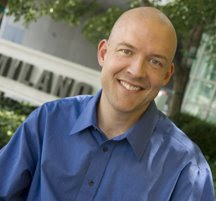
Last year, my pledge to take part in the Polar Plunge while decked out in a The Flash costume helped net more than $2,000 for Special Olympics Kansas.
In 2011, I'll plunge again. And I'll run the Polar Strut 5K the same day. While wearing The Flash costume. Training is underway...
You can donate to the cause at firstgiving.com/chrisronan.
Friday, November 5, 2010

Wednesday, June 16, 2010
Date with a driver
I should have known yesterday's journey home was doomed. (As you may know, I commute to and from work via bicycle most days.) On Tuesday, I mounted my two-wheeler and was not a quarter-mile into the ride when I thought, "Wow, I'm really feeling the breeze today." I reached my hand up to my head and realized I'd forgot my helmet. Unprecedented, for me. So I reversed course, returned to the office for the helmet and started anew.
As I approached a red light, not a half-mile into the new ride, a car pulled alongside in my lane. This is not unusual, as a wide lane can typically handle both a bicycle and a small car. What was unusual is that rather than remaining on the left side of the lane, this car suddenly moved over to the right side, where I was riding. I would have been hit had I not bailed into the adjacent turn lane.
As I mentioned, this was right before a red light. So, I moseyed on up to the car's passenger-side window and motioned for the driver to roll her window down. She did and I asked as calmly as I could, "Are you crazy? You almost ran me over!"
(A few notes about this car and its driver. Notes that shouldn't matter, but I'll point them out anyway. Beautiful, seemingly newish vehicle. Johnson County plates. The car's occupant was well-dressed and, in a stroke of irony, a fellow Hallmark employee. The point of making these points is that cyclists tend to stereotype cycling-unfriendly drivers as the less-affluent or rural residents. My experience has been just the opposite: the worst drivers to cyclists are the well-heeled and those who work at KU Medical Center.)
She responded to my initial question with, "I'm sorry, but I waited for you as long as I could."
(A few more notes. First, remember that we're at a stoplight. There was another stop light less than a quarter-mile before this one. Between here and there, I had two cars in front of me, all of us moving at 20-25 miles per hour in a 25 mph zone. She didn't have to wait for anything. But let's just say that she did. Are we to accept that because one to two seconds were added to her commute that I deserved to die?)
My response: "Maam (yes, I really did say that), I could legally take up this entire lane if I wanted to. But I'm all the way to the right and there's another lane you could've used if you wanted to pass."
She replied, "I'm sorry if you feel that I infringed upon you." (Yes, she really did say that.)
To which I said, "It's not a matter of what I feel. It's a matter of what the law is. You need to read a driver's handbook before you get out on the road again."
It was a surprisingly civil discussion, given the adrenaline coursing through my veins. The light turned green, she unnecessarily revved her engine and sped away.
I know cyclists can be annoying to motorists. That's why I use less-traveled streets and go to great lengths to observe all road rules. Most motorists reciprocate by treating me very decently. Every so often, though, I cross paths with a stinker who doesn't place much value on the lives of her fellow citizens/Hallmarkers.
That's what I get for not remembering my helmet in the first place.
As I approached a red light, not a half-mile into the new ride, a car pulled alongside in my lane. This is not unusual, as a wide lane can typically handle both a bicycle and a small car. What was unusual is that rather than remaining on the left side of the lane, this car suddenly moved over to the right side, where I was riding. I would have been hit had I not bailed into the adjacent turn lane.
As I mentioned, this was right before a red light. So, I moseyed on up to the car's passenger-side window and motioned for the driver to roll her window down. She did and I asked as calmly as I could, "Are you crazy? You almost ran me over!"
(A few notes about this car and its driver. Notes that shouldn't matter, but I'll point them out anyway. Beautiful, seemingly newish vehicle. Johnson County plates. The car's occupant was well-dressed and, in a stroke of irony, a fellow Hallmark employee. The point of making these points is that cyclists tend to stereotype cycling-unfriendly drivers as the less-affluent or rural residents. My experience has been just the opposite: the worst drivers to cyclists are the well-heeled and those who work at KU Medical Center.)
She responded to my initial question with, "I'm sorry, but I waited for you as long as I could."
(A few more notes. First, remember that we're at a stoplight. There was another stop light less than a quarter-mile before this one. Between here and there, I had two cars in front of me, all of us moving at 20-25 miles per hour in a 25 mph zone. She didn't have to wait for anything. But let's just say that she did. Are we to accept that because one to two seconds were added to her commute that I deserved to die?)
My response: "Maam (yes, I really did say that), I could legally take up this entire lane if I wanted to. But I'm all the way to the right and there's another lane you could've used if you wanted to pass."
She replied, "I'm sorry if you feel that I infringed upon you." (Yes, she really did say that.)
To which I said, "It's not a matter of what I feel. It's a matter of what the law is. You need to read a driver's handbook before you get out on the road again."
It was a surprisingly civil discussion, given the adrenaline coursing through my veins. The light turned green, she unnecessarily revved her engine and sped away.
I know cyclists can be annoying to motorists. That's why I use less-traveled streets and go to great lengths to observe all road rules. Most motorists reciprocate by treating me very decently. Every so often, though, I cross paths with a stinker who doesn't place much value on the lives of her fellow citizens/Hallmarkers.
That's what I get for not remembering my helmet in the first place.
Sunday, May 2, 2010
"Wanna Be Startin' Something"
On Thursday, I will complete the seventh of twelve courses required for a Master of Science in Journalism (Marketing Communications) from the University of Kansas. The seventh course is JOUR 824: Creative Process.
Throughout the semester, we've studied various hallmarks of the creative process. Observation is one of them. Some of the best ideas come from simply paying attention to what's going on around you.
Earlier this year, shortly after the semester began, I was listening to music while working out on a stationary bike. One of Michael Jackson's most popular songs, "Wanna Be Startin' Something," came on. I was wearing headphones and found my ears zeroing in on the song's various instruments and sound effects. I decided to follow my "creative process" to see what my mind's version of the song's music video would look like. Here's the result:
Throughout the semester, we've studied various hallmarks of the creative process. Observation is one of them. Some of the best ideas come from simply paying attention to what's going on around you.
Earlier this year, shortly after the semester began, I was listening to music while working out on a stationary bike. One of Michael Jackson's most popular songs, "Wanna Be Startin' Something," came on. I was wearing headphones and found my ears zeroing in on the song's various instruments and sound effects. I decided to follow my "creative process" to see what my mind's version of the song's music video would look like. Here's the result:
Tuesday, April 13, 2010
Running: The College Years
(The running saga moves into college, preceded by parts 1, 2, 3, 4, 5, 6, 7, 8, 9, 10, 11, 12, 13, 14 and 15.)
I don't think anyone minds that I've waited so long to continue the saga of my running career. Writing about high school was easy. College, not so much. I've thought about it several times in recent weeks and just haven't been inspired to write. Here's my best shot…
My college running career consisted of a few peaks and far too many valleys. It's that way for a lot of people. We rule the roost in high school, then find a crueler existence at the next level. Some of us get bogged down in studies. Or parties. Or any of a hundred other things. None of that applied to me. I really did try very hard to become a good college runner. It just didn't happen.
I'd slam out several weeks of awesome training, only to be sidelined by injury (freshman year track, senior year cross country). I redshirted my sophomore cross country season, then had track wiped out by mononucleosis. Junior year cross country wasn't too bad. Then I tore my hamstring during indoor track (at a K-State meet, as if I needed another reason to hate K-State), which screwed up outdoor track. In the wink of an eye, I was a senior. By that time, I was interning at a Topeka television station and more focused on graduating and getting a job than on running. After an injury-riddled senior cross country season, I visited my coach's office and told him what we both knew: it was time to hang it up. He was surprised/impressed I'd lasted as long as I did.
For as frustrating as the overall experience was, I came away with plenty of great memories: racing the 1500-meters in a field that included Olympian Steve Holman, becoming a letterman and a member of the K-Club, the annual commando game next to the Kansas River and the pre-cross country season camps at Rim Rock Farm. Met people who will be friends for life. Best of all, I can always say I wore the pink and blue.
That period of time also taught me to appreciate the success that was to come. When I graduated from KU in May of 1996, I was pretty sure I'd never run competitively again. Little did I know.
I don't think anyone minds that I've waited so long to continue the saga of my running career. Writing about high school was easy. College, not so much. I've thought about it several times in recent weeks and just haven't been inspired to write. Here's my best shot…
My college running career consisted of a few peaks and far too many valleys. It's that way for a lot of people. We rule the roost in high school, then find a crueler existence at the next level. Some of us get bogged down in studies. Or parties. Or any of a hundred other things. None of that applied to me. I really did try very hard to become a good college runner. It just didn't happen.
I'd slam out several weeks of awesome training, only to be sidelined by injury (freshman year track, senior year cross country). I redshirted my sophomore cross country season, then had track wiped out by mononucleosis. Junior year cross country wasn't too bad. Then I tore my hamstring during indoor track (at a K-State meet, as if I needed another reason to hate K-State), which screwed up outdoor track. In the wink of an eye, I was a senior. By that time, I was interning at a Topeka television station and more focused on graduating and getting a job than on running. After an injury-riddled senior cross country season, I visited my coach's office and told him what we both knew: it was time to hang it up. He was surprised/impressed I'd lasted as long as I did.
For as frustrating as the overall experience was, I came away with plenty of great memories: racing the 1500-meters in a field that included Olympian Steve Holman, becoming a letterman and a member of the K-Club, the annual commando game next to the Kansas River and the pre-cross country season camps at Rim Rock Farm. Met people who will be friends for life. Best of all, I can always say I wore the pink and blue.
That period of time also taught me to appreciate the success that was to come. When I graduated from KU in May of 1996, I was pretty sure I'd never run competitively again. Little did I know.
Saturday, March 13, 2010
Running: H.S. Senior Track (The end)
(The story of my running reaches the end of high school, preceded by parts 1, 2, 3, 4, 5, 6, 7, 8, 9, 10, 11, 12, 13 and 14.)
I always ran well at Shawnee Mission North. I PR'd there in the 1600 as a sophomore, the 3200 as a junior and the 1600 as a senior. (Years later, I even won a couple Corporate Challenge races on that track.) As I've said before, I thrived on settling old scores. And I considered my junior year SM North Relays disqualification to be the biggest score of all.
The two weeks between the KU Relays and SM North were fairly uneventful. At Bonner Springs, I anchored our winning 3200 relay, won the open 800 and ran a 53-second leg on our champion 1600 relay. We raced twice the next week. On Tuesday, at Olathe North, I won the 1600 in 4:22 and the 800 in a PR of 1:57, before clocking another 53-second leg on the 1600 relay. I raced four times at our Saturday home meet, anchoring the winning 3200 relay, winning the 1600 and 800, then running another 53-second 1600 relay split.
As I mentioned in a previous entry, I had a terrible cold early in the season. Some shortness of breath bothered me in the ensuing weeks and I finally went to see a doctor in mid-April. He speculated that I had trained through walking pneumonia and prescribed an inhaler for bronchiospasms. It's a partial explanation for why the season wasn't going as well as I hoped.
That was the state of things going into my final SM North Relays. With league, regionals and state coming up, we knew this would be my last chance for a fast 1600. I desperately wanted to run 4:10, a somewhat foolish notion given I'd not eclipsed 4:22 all season, and my closest competitor couldn't break 4:20. Still, I gave it a whirl, running the first and second laps in 60 and 65 seconds. A 66-second third lap squelched my 4:10 hopes, but I managed to finish in a PR and meet record of 4:16.
Coach Wilson made me run the 800 later that night. I didn't want to, but I'm glad he forced the issue. It was one more chance to run against my old rival, DeSoto's Ryan Johnson. His school had dropped back to Class 4A, meaning we wouldn't have a regional or state rematch.
Anyone watching that 800 would have assumed I was out of it at the halfway mark. I'd have agreed. My legs, heavy from the 1600, could only muster a 59-second first lap. But something magical happened during the next 200 meters. I didn't feel I was running any faster, but I somehow glided past everyone. Everyone except Ryan. I settled behind him with 200 meters left, knowing I had, at best, 100 meters of gas in the tank. At the top of the homestraight, I moved alongside him as if to say, "Let's settle this thing." It was a dead sprint to the finish, with me inching just ahead for a 1:57 win.
As I tried to catch my breath, I felt an arm put me in a headlock, punctuated by, "You son of a….!" It was Ryan, good-natured as always. I can't express how fun it was to race against him.
There's not much to say about the rest of the season. The regional meet kind of said it all. I tried, again, to run a fast 1600. After a 2:04 first half, I slowed to a 4:17 finish. I ran a 9:36 3200 later that night. Pretty good double by most standards. It merited this journal entry: "Didn't feel very good in either race. Wasn't very loose. Didn't care too much about the 3200. Just didn't put enough mental energy in." It's hard to believe anyone could get bored with winning. But that's just what was happening. I knew no one could compete with me at state and I easily defended my 3200 (9:25) and 1600 (4:21) titles.
I know I should have enjoyed that season more than I did. The only race I lost was the mile at KU. (After I had won the two-mile a few hours earlier.) By any measure, that's a very good record. But I was bummed about not running faster. One could argue that it's hard to run a 4:10 1600 or 9:00 3200 when no one around you can run 4:20 or 9:30. But I still felt I should have found a way to get closer to those goals.
A change of scenery was long overdue.
I always ran well at Shawnee Mission North. I PR'd there in the 1600 as a sophomore, the 3200 as a junior and the 1600 as a senior. (Years later, I even won a couple Corporate Challenge races on that track.) As I've said before, I thrived on settling old scores. And I considered my junior year SM North Relays disqualification to be the biggest score of all.
The two weeks between the KU Relays and SM North were fairly uneventful. At Bonner Springs, I anchored our winning 3200 relay, won the open 800 and ran a 53-second leg on our champion 1600 relay. We raced twice the next week. On Tuesday, at Olathe North, I won the 1600 in 4:22 and the 800 in a PR of 1:57, before clocking another 53-second leg on the 1600 relay. I raced four times at our Saturday home meet, anchoring the winning 3200 relay, winning the 1600 and 800, then running another 53-second 1600 relay split.
As I mentioned in a previous entry, I had a terrible cold early in the season. Some shortness of breath bothered me in the ensuing weeks and I finally went to see a doctor in mid-April. He speculated that I had trained through walking pneumonia and prescribed an inhaler for bronchiospasms. It's a partial explanation for why the season wasn't going as well as I hoped.
That was the state of things going into my final SM North Relays. With league, regionals and state coming up, we knew this would be my last chance for a fast 1600. I desperately wanted to run 4:10, a somewhat foolish notion given I'd not eclipsed 4:22 all season, and my closest competitor couldn't break 4:20. Still, I gave it a whirl, running the first and second laps in 60 and 65 seconds. A 66-second third lap squelched my 4:10 hopes, but I managed to finish in a PR and meet record of 4:16.
Coach Wilson made me run the 800 later that night. I didn't want to, but I'm glad he forced the issue. It was one more chance to run against my old rival, DeSoto's Ryan Johnson. His school had dropped back to Class 4A, meaning we wouldn't have a regional or state rematch.
Anyone watching that 800 would have assumed I was out of it at the halfway mark. I'd have agreed. My legs, heavy from the 1600, could only muster a 59-second first lap. But something magical happened during the next 200 meters. I didn't feel I was running any faster, but I somehow glided past everyone. Everyone except Ryan. I settled behind him with 200 meters left, knowing I had, at best, 100 meters of gas in the tank. At the top of the homestraight, I moved alongside him as if to say, "Let's settle this thing." It was a dead sprint to the finish, with me inching just ahead for a 1:57 win.
As I tried to catch my breath, I felt an arm put me in a headlock, punctuated by, "You son of a….!" It was Ryan, good-natured as always. I can't express how fun it was to race against him.
There's not much to say about the rest of the season. The regional meet kind of said it all. I tried, again, to run a fast 1600. After a 2:04 first half, I slowed to a 4:17 finish. I ran a 9:36 3200 later that night. Pretty good double by most standards. It merited this journal entry: "Didn't feel very good in either race. Wasn't very loose. Didn't care too much about the 3200. Just didn't put enough mental energy in." It's hard to believe anyone could get bored with winning. But that's just what was happening. I knew no one could compete with me at state and I easily defended my 3200 (9:25) and 1600 (4:21) titles.
I know I should have enjoyed that season more than I did. The only race I lost was the mile at KU. (After I had won the two-mile a few hours earlier.) By any measure, that's a very good record. But I was bummed about not running faster. One could argue that it's hard to run a 4:10 1600 or 9:00 3200 when no one around you can run 4:20 or 9:30. But I still felt I should have found a way to get closer to those goals.
A change of scenery was long overdue.
Saturday, March 6, 2010
Running: H.S. Senior Track (The beginning)
(The running saga continues with part 14. Here are parts 1, 2, 3, 4, 5, 6, 7, 8, 9, 10, 11, 12 and 13.)
I raced 19 individual events during my final high school track season, winning 18 of them. Yet, reading my journals from that period, one would think nothing went right.
I developed a terrible cold the first week of practice, which caused me to take three days off from training. I noted various symptoms in my journal for several weeks. (More on that next time.)
Our first meet was cancelled because of poor weather, so we didn't race until April 4 at Paola. I opened with a 4:31 mile, a 2:03 (meet record) 800 and a 55-second split on the mile relay. The day's journal entry: "Didn't really run very well. Tight during 1600 and not up for 800."
We headed to Bishop Miege the next week, where I anchored our 3200 relay and won slow 1600 and 3200 races. That 1600 was the first sign of how frustrating the season would be. When the gun went off, the pack bunched up behind me as we jogged a 71 second first lap. On the homestretch of the second lap, I veered into lane four, turned around and motioned, as if to ask if anyone else cared to lead (or run hard.) No one did. We hit the half in 2:22. I ran the last 800 in 2:12 for the win.
The same scene played out at most of our meets, with two exceptions.
The KU Relays arrived the week after Miege. A stacked two-mile field included Emporia's Kevin Newkirk (the 6A cross country champ), Tulsa's Eric Richard (an Oklahoma state champ), Wichita's Tony Greene and a host of other studs from around the region. I knew I'd have great competition to accompany the chip on my shoulder from not qualifying for KU the previous year.
After a quick first 440 (67 seconds), we slowed to laps of 71, 73, 75 and 78. The pedestrian pace was a Godsend for me, because I felt sluggish. If the first mile had been 4:40 or faster, instead of 4:46, I'm not sure what would have happened. As it was, I clung to the back of the lead pack with two laps to go.
About 100 yards from launching my traditional 600-to-go kick, I sensed someone moving to pass on the outside. Not wanting to risk being boxed, I decided it was time to go all in. I sprinted to the lead and ran scared for 600 yards. It wasn't until I entered the final stretch that I heard the announcer say, "Let's bring in our first boys champion of the day…" I relaxed a bit, not hearing the end of the sentence: "…not yet decided." Little did I know Ray Gorze of Greeley, CO was bearing down on me. I crossed the finish line less than a second ahead of him. The final 880 yards was covered in 2:11, giving me a new two-mile PR of 9:27.
It was one of two highlights that season. The second came three weeks later, when I had a last chance for a fast 1600, as well as a final race with my favorite rival. It would all happen on the track where I'd been disqualified the previous year. In Michael Corleone terms, it was time to settle all family business.
I raced 19 individual events during my final high school track season, winning 18 of them. Yet, reading my journals from that period, one would think nothing went right.
I developed a terrible cold the first week of practice, which caused me to take three days off from training. I noted various symptoms in my journal for several weeks. (More on that next time.)
Our first meet was cancelled because of poor weather, so we didn't race until April 4 at Paola. I opened with a 4:31 mile, a 2:03 (meet record) 800 and a 55-second split on the mile relay. The day's journal entry: "Didn't really run very well. Tight during 1600 and not up for 800."
We headed to Bishop Miege the next week, where I anchored our 3200 relay and won slow 1600 and 3200 races. That 1600 was the first sign of how frustrating the season would be. When the gun went off, the pack bunched up behind me as we jogged a 71 second first lap. On the homestretch of the second lap, I veered into lane four, turned around and motioned, as if to ask if anyone else cared to lead (or run hard.) No one did. We hit the half in 2:22. I ran the last 800 in 2:12 for the win.
The same scene played out at most of our meets, with two exceptions.
The KU Relays arrived the week after Miege. A stacked two-mile field included Emporia's Kevin Newkirk (the 6A cross country champ), Tulsa's Eric Richard (an Oklahoma state champ), Wichita's Tony Greene and a host of other studs from around the region. I knew I'd have great competition to accompany the chip on my shoulder from not qualifying for KU the previous year.
After a quick first 440 (67 seconds), we slowed to laps of 71, 73, 75 and 78. The pedestrian pace was a Godsend for me, because I felt sluggish. If the first mile had been 4:40 or faster, instead of 4:46, I'm not sure what would have happened. As it was, I clung to the back of the lead pack with two laps to go.
About 100 yards from launching my traditional 600-to-go kick, I sensed someone moving to pass on the outside. Not wanting to risk being boxed, I decided it was time to go all in. I sprinted to the lead and ran scared for 600 yards. It wasn't until I entered the final stretch that I heard the announcer say, "Let's bring in our first boys champion of the day…" I relaxed a bit, not hearing the end of the sentence: "…not yet decided." Little did I know Ray Gorze of Greeley, CO was bearing down on me. I crossed the finish line less than a second ahead of him. The final 880 yards was covered in 2:11, giving me a new two-mile PR of 9:27.
It was one of two highlights that season. The second came three weeks later, when I had a last chance for a fast 1600, as well as a final race with my favorite rival. It would all happen on the track where I'd been disqualified the previous year. In Michael Corleone terms, it was time to settle all family business.
Saturday, February 27, 2010
Running: One last high school winter
(Here we go with Part 13. And here are parts 1, 2, 3, 4, 5, 6, 7, 8, 9, 10, 11 and 12.)
When we left off, I had just won the 5A State Cross Country race and was looking ahead to my next event, the Kinney Midwest Regional in Kenosha, WI. Kinney was my main goal throughout the fall.
With the way I finished the season and with how workouts went between State and Kinney, I thought I had a great chance to qualify for the Kinney national meet. But I bombed. After a good start, I faded badly and placed 119th. That day’s journal entry: “worst race I’ve ever run, feel ashamed of myself, feel awful.” Fortunately, the 17-year-old me was resilient, as I wrote two days later: “It was a good year. I’ve made a lot of breakthroughs and have got a lot to be proud of. On to track season.”
Looking back, it’s no surprise I laid an egg in Kenosha. I’d run 396 days without a break. I finished the cross country season with six straight sub-16 minute performances. I was tired. And, as much as I wanted to do well at Kinney for myself, it was something I wanted more for Tom Dowling. Tom talked a lot about Kinney and often commented about it in my journal. In my mind, State was for Coach Wilson and Kinney was for Tom. So, I got one out of two.
I prepared for my senior track season with a solid winter. In late January/early February, I tallied three consecutive 100-mile training weeks, one that included a 15:30 three-mile time trial. A week later, I ran my only race of the winter, a disappointing third-place mile at the AAU Nationals. A few days after that, I flew to Durham, NC for my official visit to Duke University.
The Duke visit marked the height of my college recruitment process. I was fortunate to get letters and calls from all over the country. The most persistent: Kansas, Duke, Dartmouth, Arkansas and Kansas State. I regret not accepting more invitations to visit, but I was busy with school (and running) and only ventured to KU and Duke. I’d bled crimson and blue since elementary school, when I earned a Jayhawk patch for completing a KU-sponsored school reading program. It would be tough for anyone to pry me from Lawrence, KS. Still, things got interesting when, on my official KU visit, one of my hosts told me KU was the last place I should consider for college running.
One week after returning from Duke, I reported for the first practice of my final high school track season.
When we left off, I had just won the 5A State Cross Country race and was looking ahead to my next event, the Kinney Midwest Regional in Kenosha, WI. Kinney was my main goal throughout the fall.
With the way I finished the season and with how workouts went between State and Kinney, I thought I had a great chance to qualify for the Kinney national meet. But I bombed. After a good start, I faded badly and placed 119th. That day’s journal entry: “worst race I’ve ever run, feel ashamed of myself, feel awful.” Fortunately, the 17-year-old me was resilient, as I wrote two days later: “It was a good year. I’ve made a lot of breakthroughs and have got a lot to be proud of. On to track season.”
Looking back, it’s no surprise I laid an egg in Kenosha. I’d run 396 days without a break. I finished the cross country season with six straight sub-16 minute performances. I was tired. And, as much as I wanted to do well at Kinney for myself, it was something I wanted more for Tom Dowling. Tom talked a lot about Kinney and often commented about it in my journal. In my mind, State was for Coach Wilson and Kinney was for Tom. So, I got one out of two.
I prepared for my senior track season with a solid winter. In late January/early February, I tallied three consecutive 100-mile training weeks, one that included a 15:30 three-mile time trial. A week later, I ran my only race of the winter, a disappointing third-place mile at the AAU Nationals. A few days after that, I flew to Durham, NC for my official visit to Duke University.
The Duke visit marked the height of my college recruitment process. I was fortunate to get letters and calls from all over the country. The most persistent: Kansas, Duke, Dartmouth, Arkansas and Kansas State. I regret not accepting more invitations to visit, but I was busy with school (and running) and only ventured to KU and Duke. I’d bled crimson and blue since elementary school, when I earned a Jayhawk patch for completing a KU-sponsored school reading program. It would be tough for anyone to pry me from Lawrence, KS. Still, things got interesting when, on my official KU visit, one of my hosts told me KU was the last place I should consider for college running.
One week after returning from Duke, I reported for the first practice of my final high school track season.
Thursday, February 18, 2010
Running: 1991 Cross Country
I didn't realize it at the time, but during the summer of 1992, I transitioned from the up-and-coming runner to the one everyone else chased. For nearly two years, I'd been obsessed with the beating certain people and winning a state championship. Now, I'd beaten everyone on my list, won two championships and had a hard time focusing on new goals.
I worked for my dad's roofing company every summer of high school. Most days, including Saturdays, the work lasted from 6 a.m. to around 5 p.m. The money was great, but it did my running no favors. Between mid-June and mid-August (when cross country practice started), I averaged 88 miles of training per week. So, that's 50+ hours of outdoor construction work, plus at least 10 hours of running, every week. It was too much.
But, again, I didn't realize it at the time. I opened my senior cross country season by winning our home invitational, which was my first-ever cross country victory. I placed third at the Park Hill Invite, behind Missouri's top two runners, Randon Richards and Sam Wells. At Leavenworth, I ran my only poor race of the year, finishing fourth. I was ill that week, but my journal entry for that race was unforgiving: "…was close to winner at end, but wimped out and didn't go after him."
After Leavenworth, I bounced back with wins at the KC Metro meet and Blue Valley Invite. Randon got me again at the STA Fall Run. But I went undefeated the rest of the season. I won the Eastern Kansas League meet by a minute, after which Bishop Miege's coach (a friend of our coach) approached me with some advice. He'd heard I jogged a few miles before school each day and suggested I stop because it was probably tiring me out. I replied, "With all due respect, coach, I just beat your best guy by a minute. I think my routine is working pretty well."
I capped the season with a regional title (and course record) at Blue Valley, then a 25-second win at the state meet in Manhattan. (That meet was delayed a week due to snow/ice and we ended up running on the roads at Tuttle Creek Park.) All told, six wins and three more top-four finishes. I didn't lose to anyone from Kansas. Pretty good season, especially for someone who didn't (and never did) see himself as a good cross country runner.
I wish I allowed myself to have more fun that season, though. I approached every workout and every race with this feeling that I had to be "on" all the time. And that kept me from enjoying the ride as much as I should have. Beyond what I accomplished individually, our team went from not qualifying for state in 1988 or 1989 to becoming a serious title contender in 1991. We finished in the top three at seven of our nine meets. It really was a great group of guys.
There's this piece of video that sums the season up for me. I'm standing on the podium at the state meet, along with two teammates who placed in the top 15. And I look like I'd rather be anywhere else. Partly because I don't care for that kind of attention. But mostly because I was already thinking about the next race.
Saturday, February 13, 2010
Running: 1991 State Track
(And so we roll along. Here's part 11, preceded by 1, 2, 3, 4, 5, 6, 7, 8, 9 and 10.)
Winning two regional titles did nothing to damper my confidence. Only four of us (two distance runners, a sprinter and a pole vaulter) had qualifed to represent Aquinas at state. I was zeroed in, but the quiet at practice made it that much easier to focus on the task at hand.
Nerves didn’t become an issue until the morning of the meet. I think Coach Baxter could sense my anxiety as she drove me to Cessna Stadium for the 3200-meter race. I couldn’t help thinking of last year’s tripping. What if something happened this time? I couldn’t stand the thought of seeing another year’s worth of work go to waste. And then she turned to me and said something I’ll never forget: “Don’t let anyone take what belongs to you.” And that’s all I needed to hear. Suddenly, my mind was filled with memories of all those winter and summer training runs. The days I hit the road when others stayed in. The 23 miles on Christmas Day. The 16 miles on New Year’s. 73 miles the week of spring break. The state titles were mine. It was time to claim them.
The gun fired to start the 3200 and, as at the regional, I went straight to the front. Through the first 800 meters (2:22), I could feel someone right on my shoulder. (It turned out to be Great Bend’s Ty Herron, who would become a KU teammate.) Someone was still with me at the mile (4:47) and that concerned me because I’d never run the first mile of a 3200 that fast. How could someone still be keeping pace?
I ran the next four laps certain that someone was ready to pass me at any moment. Running scared, really. The reward for years of work was moments away and I was terrified that someone or something might take it away. I heard the announcer mention I was on meet record pace. (He was wrong, but it made me run that much faster.)
I was exhausted with 150 meters to go. It seemed I was getting slower. (I wasn’t. I’d run the seventh lap in 69 seconds and would complete the second mile in 4:40.) My left foot touched a rubber barrier on the inside of the track. I lost balance. For an instant, I was sure I’d end up flat on my face. It was 1990 all over again. But it wasn’t. I regained my balance as an official yelled, “You’re okay, you’re okay!”
I lapped a runner on the homestraight and finished the race in 9 minutes, 27 seconds, a new personal best. I had just enough energy left to raise my arms in triumph as an official tried to lead me to a water stand. (Tom Dowling was on the track with a videocamera and a friend, who interviewed me after the race. It was the first time I can remember meeting John Rinkenbaugh.)
The rest of that day was almost anticlimactic. I’d spent so many hours dreaming of what it would feel like to win a state championship that I spent most of the day enjoying the feeling. But I had another race to run. The 1600-meter again matched me with Ryan Johnson and Schlagle’s Ron Clemons. We hit the halfway mark in 2:09.
I remember hearing Ron’s coach yell, “C’mon Ron, make him work.” He didn’t encourage Ron to beat me. Just making me work was all that could be hoped for. Another jolt of confidence. I covered the final 800 in 2:10 and won my second title by nine seconds, in 4:19.
I lingered on the infield after the 1600 and found myself talking with Lawrence’s Ned Ryun, who had won the 6A 1600. His dad, the legendary Jim Ryun, came over to say something to Ned, who introduced us. Jim shook my hand and complimented me on running such an impressive race. Now, it’s entirely possible (and maybe even probable) that Jim didn’t watch a second of my race and was only being very nice to a starstruck 17-year-old. But I didn’t (and don’t) care. It was the perfect end to a near-perfect day.
Winning two regional titles did nothing to damper my confidence. Only four of us (two distance runners, a sprinter and a pole vaulter) had qualifed to represent Aquinas at state. I was zeroed in, but the quiet at practice made it that much easier to focus on the task at hand.
Nerves didn’t become an issue until the morning of the meet. I think Coach Baxter could sense my anxiety as she drove me to Cessna Stadium for the 3200-meter race. I couldn’t help thinking of last year’s tripping. What if something happened this time? I couldn’t stand the thought of seeing another year’s worth of work go to waste. And then she turned to me and said something I’ll never forget: “Don’t let anyone take what belongs to you.” And that’s all I needed to hear. Suddenly, my mind was filled with memories of all those winter and summer training runs. The days I hit the road when others stayed in. The 23 miles on Christmas Day. The 16 miles on New Year’s. 73 miles the week of spring break. The state titles were mine. It was time to claim them.
The gun fired to start the 3200 and, as at the regional, I went straight to the front. Through the first 800 meters (2:22), I could feel someone right on my shoulder. (It turned out to be Great Bend’s Ty Herron, who would become a KU teammate.) Someone was still with me at the mile (4:47) and that concerned me because I’d never run the first mile of a 3200 that fast. How could someone still be keeping pace?
I ran the next four laps certain that someone was ready to pass me at any moment. Running scared, really. The reward for years of work was moments away and I was terrified that someone or something might take it away. I heard the announcer mention I was on meet record pace. (He was wrong, but it made me run that much faster.)
I was exhausted with 150 meters to go. It seemed I was getting slower. (I wasn’t. I’d run the seventh lap in 69 seconds and would complete the second mile in 4:40.) My left foot touched a rubber barrier on the inside of the track. I lost balance. For an instant, I was sure I’d end up flat on my face. It was 1990 all over again. But it wasn’t. I regained my balance as an official yelled, “You’re okay, you’re okay!”
I lapped a runner on the homestraight and finished the race in 9 minutes, 27 seconds, a new personal best. I had just enough energy left to raise my arms in triumph as an official tried to lead me to a water stand. (Tom Dowling was on the track with a videocamera and a friend, who interviewed me after the race. It was the first time I can remember meeting John Rinkenbaugh.)
The rest of that day was almost anticlimactic. I’d spent so many hours dreaming of what it would feel like to win a state championship that I spent most of the day enjoying the feeling. But I had another race to run. The 1600-meter again matched me with Ryan Johnson and Schlagle’s Ron Clemons. We hit the halfway mark in 2:09.
I remember hearing Ron’s coach yell, “C’mon Ron, make him work.” He didn’t encourage Ron to beat me. Just making me work was all that could be hoped for. Another jolt of confidence. I covered the final 800 in 2:10 and won my second title by nine seconds, in 4:19.
I lingered on the infield after the 1600 and found myself talking with Lawrence’s Ned Ryun, who had won the 6A 1600. His dad, the legendary Jim Ryun, came over to say something to Ned, who introduced us. Jim shook my hand and complimented me on running such an impressive race. Now, it’s entirely possible (and maybe even probable) that Jim didn’t watch a second of my race and was only being very nice to a starstruck 17-year-old. But I didn’t (and don’t) care. It was the perfect end to a near-perfect day.
Saturday, February 6, 2010
Running: 1991 Regional Track
(To recap, a longtime friend, John Rinkenbaugh, recently blogged about Tom Dowling, the man who introduced us in the early 1990s. John's blog inspired me to write about running and what led me to become so enamored with it. Tom is a big part of the story. So is John. And Greg Wilson. And countless others. I'm writing this as much for myself and the preservation of memories as anything else. But, perhaps the story might mean something to someone else, too. Here's Part 10:)
My running confidence was at an all-time high as I approached my junior season regional track meet. I’d never felt so driven. The regional was held at Shawnee Mission North, site my disqualification just two weeks earlier.
Aquinas had jumped from Class 4A to 5A between my sophomore and junior years. As luck would have it, DeSoto also moved up and was in our regional. So I would again get to meet my rival, reigning 4A 1600 champ Ryan Johnson.
As disappointing as the 1990 State 1600 “tripping” was, it taught me the front of the pack is sometimes the best place to be. It’s a lot harder to trip and fall when you’re leading. (Though I almost managed to do it. More on that next time.) I left nothing to chance in the 1600, my first race of the regional. I bolted to the lead on the first curve and stayed there through laps of 62, 67, 66 and 63 seconds for a perfectly split 4:18.9. Ryan finished seven seconds back.
A few hours later, I toed the line for the 3200. This time, I was content to let others set the early pace. My confidence was such that I had no doubt I would own the last 600 meters. We hit the mile mark in 5:01. The pace slowed and my sixth lap was run in 80 seconds, the slowest of the race. I took the lead and, as we entered the backstretch of the seventh lap, Miege’s Dan Decoursey passed me, sparking a roar of approval from his cheering section. I shook my head and said to myself, “Well, if that’s the way he wants to play it…,” and started my kick a little early. I ran the last lap in 65 seconds and won by 16 seconds.
In 1991, it wasn’t nearly as easy to know who was running fast throughout the state as it is today. But I did know our regional was one of the better ones. Having defeated Ryan in the 1600 and Dan in the 3200, I was pretty sure I was the one to beat at the state meet in Wichita. But if there’s one thing I’d learned from the previous year’s “tripping,” it’s that I couldn’t count on a state title until the gold medal was in hand.
My running confidence was at an all-time high as I approached my junior season regional track meet. I’d never felt so driven. The regional was held at Shawnee Mission North, site my disqualification just two weeks earlier.
Aquinas had jumped from Class 4A to 5A between my sophomore and junior years. As luck would have it, DeSoto also moved up and was in our regional. So I would again get to meet my rival, reigning 4A 1600 champ Ryan Johnson.
As disappointing as the 1990 State 1600 “tripping” was, it taught me the front of the pack is sometimes the best place to be. It’s a lot harder to trip and fall when you’re leading. (Though I almost managed to do it. More on that next time.) I left nothing to chance in the 1600, my first race of the regional. I bolted to the lead on the first curve and stayed there through laps of 62, 67, 66 and 63 seconds for a perfectly split 4:18.9. Ryan finished seven seconds back.
A few hours later, I toed the line for the 3200. This time, I was content to let others set the early pace. My confidence was such that I had no doubt I would own the last 600 meters. We hit the mile mark in 5:01. The pace slowed and my sixth lap was run in 80 seconds, the slowest of the race. I took the lead and, as we entered the backstretch of the seventh lap, Miege’s Dan Decoursey passed me, sparking a roar of approval from his cheering section. I shook my head and said to myself, “Well, if that’s the way he wants to play it…,” and started my kick a little early. I ran the last lap in 65 seconds and won by 16 seconds.
In 1991, it wasn’t nearly as easy to know who was running fast throughout the state as it is today. But I did know our regional was one of the better ones. Having defeated Ryan in the 1600 and Dan in the 3200, I was pretty sure I was the one to beat at the state meet in Wichita. But if there’s one thing I’d learned from the previous year’s “tripping,” it’s that I couldn’t count on a state title until the gold medal was in hand.
Thursday, January 21, 2010
Running: Part IX
(Next chapter. Preceded by parts 1, 2, 3, 4, 5, 6, 7 and 8.)
I have very fond memories of the Shawnee Mission North Relays, despite what happened there in 1991. The meet is where I ran a 1600-meter PR and led my idol, Thad Sketers, for half the race as a sophomore in 1990. And it's where I would break the 1600 meet record as a senior in 1992.
The 1991 meet should've been a joyous thing, but turned out to be a terrible dissapointment that further solidified the chip on my running shoulder. It was my first 3200 since the season's opening meet and the plan was simple. I had rehearsed it in my head every day since November. I'd stay right with whoever happened to be leading, no matter how fast the pace, until 600 meters remained. Then I'd start kicking like crazy.
The leader turned out to be Carlos Paradelo of SM East, who went on to have a great college career and continues to compete professionally today. I waited for the pace to hurt, through a 4:47 first mile, but it never did. It took all the patience I had to wait for the prescribed moment when I went all out. A lap and a half later, I had won the race in 9 minutes, 36 seconds, a whopping 23-second personal best. I was elated. That is, until five minutes passed and Coaches Baxter and Wilson informed me I'd been disqualified.
Disqualified? My elation dissolved into a stunned anger. The officials insisted that, while passing someone on the inside, I had taken too many consecutive steps inside the line separating the track from the infield. Thing is, during that race (and in my entire career), I never passed anyone on the inside. Surely they'd confused me with someone else. My dad had videotaped the race and offered to show it as proof. The officials politely declined.
It still gets my blood boiling to think about it. But, the fact is that disqualification probably did a lot more good than harm. Because I was like a caged animal for the next week. If people hadn't figured out how good I was yet, they'd get a clear picture the next Friday at the Eastern Kansas League meet.
Until EKL, I'd never beaten BV North's Dan Wnorowski or Bishop Miege's Dan Decoursey, who represented the class of our league. Even so, there was absolutely no doubt in my mind that I was going to destroy the field in both the 1600 and 3200. The SM North debacle had flipped a switch in my brain. I'd gone from hoping I could beat the best runners to knowing I could beat them and wanting to beat them, by a lot.
I opened with the 1600, where Wnorowski led the first 800 meters in 2:07. We slowed during the third quarter, hitting 1200 meters in 3:16. Then, I unleashed everything I had, sprinting the final lap in 62 seconds and winning in a huge PR of 4:18.0. It was the best 1600 time in Kansas that year. The 3200 event, a few hours later, was not as impressive timewise, but I won again, this time in 9:54.
In two weeks, I'd gone from a sub-4:30, 9:50-ish guy to a sub-4:20, 9:30-ish guy. I was at the top of the Kansas City Star's All-Metro rankings. And, once again, I was the favorite to win a state title. Unlike the previous year, I welcomed the role of favorite and was anxious to avenge the "tripping." My journal entry from two days after the EKL meet reads, "Already getting focused on regionals. (Ryan) Johnson. 1600. Must waste him."
I have very fond memories of the Shawnee Mission North Relays, despite what happened there in 1991. The meet is where I ran a 1600-meter PR and led my idol, Thad Sketers, for half the race as a sophomore in 1990. And it's where I would break the 1600 meet record as a senior in 1992.
The 1991 meet should've been a joyous thing, but turned out to be a terrible dissapointment that further solidified the chip on my running shoulder. It was my first 3200 since the season's opening meet and the plan was simple. I had rehearsed it in my head every day since November. I'd stay right with whoever happened to be leading, no matter how fast the pace, until 600 meters remained. Then I'd start kicking like crazy.
The leader turned out to be Carlos Paradelo of SM East, who went on to have a great college career and continues to compete professionally today. I waited for the pace to hurt, through a 4:47 first mile, but it never did. It took all the patience I had to wait for the prescribed moment when I went all out. A lap and a half later, I had won the race in 9 minutes, 36 seconds, a whopping 23-second personal best. I was elated. That is, until five minutes passed and Coaches Baxter and Wilson informed me I'd been disqualified.
Disqualified? My elation dissolved into a stunned anger. The officials insisted that, while passing someone on the inside, I had taken too many consecutive steps inside the line separating the track from the infield. Thing is, during that race (and in my entire career), I never passed anyone on the inside. Surely they'd confused me with someone else. My dad had videotaped the race and offered to show it as proof. The officials politely declined.
It still gets my blood boiling to think about it. But, the fact is that disqualification probably did a lot more good than harm. Because I was like a caged animal for the next week. If people hadn't figured out how good I was yet, they'd get a clear picture the next Friday at the Eastern Kansas League meet.
Until EKL, I'd never beaten BV North's Dan Wnorowski or Bishop Miege's Dan Decoursey, who represented the class of our league. Even so, there was absolutely no doubt in my mind that I was going to destroy the field in both the 1600 and 3200. The SM North debacle had flipped a switch in my brain. I'd gone from hoping I could beat the best runners to knowing I could beat them and wanting to beat them, by a lot.
I opened with the 1600, where Wnorowski led the first 800 meters in 2:07. We slowed during the third quarter, hitting 1200 meters in 3:16. Then, I unleashed everything I had, sprinting the final lap in 62 seconds and winning in a huge PR of 4:18.0. It was the best 1600 time in Kansas that year. The 3200 event, a few hours later, was not as impressive timewise, but I won again, this time in 9:54.
In two weeks, I'd gone from a sub-4:30, 9:50-ish guy to a sub-4:20, 9:30-ish guy. I was at the top of the Kansas City Star's All-Metro rankings. And, once again, I was the favorite to win a state title. Unlike the previous year, I welcomed the role of favorite and was anxious to avenge the "tripping." My journal entry from two days after the EKL meet reads, "Already getting focused on regionals. (Ryan) Johnson. 1600. Must waste him."
Running: Part VIII
(And we continue. Preceded by parts 1, 2, 3, 4, 5, 6 and 7.)
The winter of 1990-91 was among the most important to my running career. I turned 17 in February and had grown, both physically and mentally, to the point where I could better handle Tom's off-season training regimen. It was becoming part of my life. Just as important, I was starting to believe I could be as good as Tom, Coach Wilson and others told me I could be.
From the first of December until the end of February, I averaged 71 miles of training per week. That included a week over Christmas break when I went nuts and ran 101 miles. This was also the period when I really bought into mental picturing. For our cross country teams, it was a weekly pre-meet ritual, thanks to Coach Wilson. Now, I was doing it every day. I can still remember falling asleep, headphones on, while music played and I envisioned the havoc I was going to wreak on my competitors in the spring.
I raced a few indoor meets in Lawrence. At the January 13 AAU Regional, I won the mile and two-mile races, missing my PR in the latter by just two seconds. At the national AAU event, in mid-February, I placed third in the two-mile on Saturday before winning Sunday's mile. (We were running late for that second race and Dad was stopped for speeding a few blocks from the track. I hopped out of the car and chugged the rest of the way, arriving five minutes before the race started.) I couldn't wait for the outdoor season to start.
Practice opened on February 25 and, due to some wet weather, we only raced once between then and April 6. It was a small event, with just four teams. But one was Shawnee Mission Northwest, then and now one of the premiere distance programs in Kansas. Someone from that team won my race, the 3200. But the look of bewilderment on his teammates' faces as they watched him try to shake the still relatively unknown Aquinas kid was satisfying. I finished a few steps back in 10:10, one second off my PR. The next few weeks were non-descript, with a mile win at Paola and an 800 win at Gardner.
On April 15, our workout consisted of eight 400-meter repeats. I ran the first five in 65, 65, 66 and 66 seconds. After that fourth repeat, our head coach informed me I had not qualified to run the mile at the Kansas Relays. The next 400 was completed in 57 seconds. That's about the best way I can describe how incredibly upset I was to not be in the KU Relays field.
I didn't compete again until the Olathe North Relays on April 23, where I released a bit of KU Relays frustration with PR victories in the 1600 (4:26) and 3200 (9:59). Four days later, I won the 800 and 1600 at our home invitational. I was getting into a groove. But the real coming-out party wouldn't occur until May 3, the Shawnee Mission North Relays.
In my mind, SM North ranked third in importance only to the state meet and the KU Relays. The competition was the best I would see all season. Yet another turning point had arrived, perhaps the biggest one yet.
The winter of 1990-91 was among the most important to my running career. I turned 17 in February and had grown, both physically and mentally, to the point where I could better handle Tom's off-season training regimen. It was becoming part of my life. Just as important, I was starting to believe I could be as good as Tom, Coach Wilson and others told me I could be.
From the first of December until the end of February, I averaged 71 miles of training per week. That included a week over Christmas break when I went nuts and ran 101 miles. This was also the period when I really bought into mental picturing. For our cross country teams, it was a weekly pre-meet ritual, thanks to Coach Wilson. Now, I was doing it every day. I can still remember falling asleep, headphones on, while music played and I envisioned the havoc I was going to wreak on my competitors in the spring.
I raced a few indoor meets in Lawrence. At the January 13 AAU Regional, I won the mile and two-mile races, missing my PR in the latter by just two seconds. At the national AAU event, in mid-February, I placed third in the two-mile on Saturday before winning Sunday's mile. (We were running late for that second race and Dad was stopped for speeding a few blocks from the track. I hopped out of the car and chugged the rest of the way, arriving five minutes before the race started.) I couldn't wait for the outdoor season to start.
Practice opened on February 25 and, due to some wet weather, we only raced once between then and April 6. It was a small event, with just four teams. But one was Shawnee Mission Northwest, then and now one of the premiere distance programs in Kansas. Someone from that team won my race, the 3200. But the look of bewilderment on his teammates' faces as they watched him try to shake the still relatively unknown Aquinas kid was satisfying. I finished a few steps back in 10:10, one second off my PR. The next few weeks were non-descript, with a mile win at Paola and an 800 win at Gardner.
On April 15, our workout consisted of eight 400-meter repeats. I ran the first five in 65, 65, 66 and 66 seconds. After that fourth repeat, our head coach informed me I had not qualified to run the mile at the Kansas Relays. The next 400 was completed in 57 seconds. That's about the best way I can describe how incredibly upset I was to not be in the KU Relays field.
I didn't compete again until the Olathe North Relays on April 23, where I released a bit of KU Relays frustration with PR victories in the 1600 (4:26) and 3200 (9:59). Four days later, I won the 800 and 1600 at our home invitational. I was getting into a groove. But the real coming-out party wouldn't occur until May 3, the Shawnee Mission North Relays.
In my mind, SM North ranked third in importance only to the state meet and the KU Relays. The competition was the best I would see all season. Yet another turning point had arrived, perhaps the biggest one yet.
Thursday, January 7, 2010
Running: Part VII
(The saga continues. Preceded by parts 1, 2, 3, 4, 5 and 6.)
Revenge or redemption, whatever you want to call it, has been a recurring theme throughout my running career. If a race doesn't go well (1990 State track, 2001 Pike's Peak Ascent) or if I feel wronged in some way (1991 KU Relays and SM North Relays), I do all I can to make it right. Redemption was on my mind as I entered the summer of 1990. The tripping during the 1600-meter state track race sufficiently fueled three months of miles.
The problem was I never really took a breather. After my breakout sophomore track season, which I attributed largely to Tom Dowling's winter tutoring, I was ready to do whatever he commanded during the summer. If there's one retrospective criticism I have of Tom's training plans for me, it's that he didn't budget enough rest. It might not have been a problem, if I wasn't working 10-12 hours every summer day for Ronan's Roofing. Most days, I'd rise at 5 a.m., work in the sun from 6 to 6, eat dinner, then run at 9 p.m.
I was cooked by the time mid-July rolled around. If I felt that way now, I'd take a day or a week off. The 16-year-old version of me forged ahead. The result was a poor summer of training and, while I did have a better cross country season as a junior than as a sophomore, I didn’t competed for wins like I thought I should. Seventeenth at our home meet, seventh at Maur Hill, tenth at Leavenworth and sixth at Metro. Again, far better than what I'd achieved before, but nothing like I’d done during track season.
Tom suggested I jog three or so miles each morning before school, to keep my mileage up until later in the season. I know this drove Coach Wilson crazy. And, now that I've coached high school kids myself, I understand why. I followed Tom's advice for the first few weeks of the season. Then, sensing my fatigue was not easing, I backed off.
In late September, at the Blue Valley Invitational, things finally started turning around. I kept pace with BV North's Dan Wnorowski (a runner I wanted desperately to beat) for most of the race before placing just behind him in fourth.
The next week, I led for two miles before finishing third at a home meet. My confidence surging, I was somewhat disappointed with fourth and fifth place finishes at Eastern Kansas League and the 5A Regional meets. But, despite being slightly annoyed with those individual placings, I was thrilled that our team finished second at that regional to qualify for our first state meet. A year earlier, I'd missed the regional with a stress fracture. Now, we were on our way to Manhattan.
As a fifth place regional finisher, I was probably expected to place fifteenth to twentieth at state. Something got into me that day, though, and I ran what was probably my best cross country race to date, taking tenth place and earning All-State honors. Among those behind me, my track nemesis (and reigning 1600 meter champion) Ryan Johnson.
So, my junior cross country season turned out okay. I partially erased the disappointment of not running at regionals as a sophomore. And our team competed at its first state meet. But, as would always be the case, track was my first priority. The 1600-meter, in particular.
My ensuing winter training often took me by way of a bridge that crossed Interstate 35. From that bridge, I could see a highway sign that read "Olathe 2, Wichita 174." I created a cheap replica and affixed it to the inside of my school locker. I was going to avenge the state mile tripping and no one was going to stop me.
Revenge or redemption, whatever you want to call it, has been a recurring theme throughout my running career. If a race doesn't go well (1990 State track, 2001 Pike's Peak Ascent) or if I feel wronged in some way (1991 KU Relays and SM North Relays), I do all I can to make it right. Redemption was on my mind as I entered the summer of 1990. The tripping during the 1600-meter state track race sufficiently fueled three months of miles.
The problem was I never really took a breather. After my breakout sophomore track season, which I attributed largely to Tom Dowling's winter tutoring, I was ready to do whatever he commanded during the summer. If there's one retrospective criticism I have of Tom's training plans for me, it's that he didn't budget enough rest. It might not have been a problem, if I wasn't working 10-12 hours every summer day for Ronan's Roofing. Most days, I'd rise at 5 a.m., work in the sun from 6 to 6, eat dinner, then run at 9 p.m.
I was cooked by the time mid-July rolled around. If I felt that way now, I'd take a day or a week off. The 16-year-old version of me forged ahead. The result was a poor summer of training and, while I did have a better cross country season as a junior than as a sophomore, I didn’t competed for wins like I thought I should. Seventeenth at our home meet, seventh at Maur Hill, tenth at Leavenworth and sixth at Metro. Again, far better than what I'd achieved before, but nothing like I’d done during track season.
Tom suggested I jog three or so miles each morning before school, to keep my mileage up until later in the season. I know this drove Coach Wilson crazy. And, now that I've coached high school kids myself, I understand why. I followed Tom's advice for the first few weeks of the season. Then, sensing my fatigue was not easing, I backed off.
In late September, at the Blue Valley Invitational, things finally started turning around. I kept pace with BV North's Dan Wnorowski (a runner I wanted desperately to beat) for most of the race before placing just behind him in fourth.
The next week, I led for two miles before finishing third at a home meet. My confidence surging, I was somewhat disappointed with fourth and fifth place finishes at Eastern Kansas League and the 5A Regional meets. But, despite being slightly annoyed with those individual placings, I was thrilled that our team finished second at that regional to qualify for our first state meet. A year earlier, I'd missed the regional with a stress fracture. Now, we were on our way to Manhattan.
As a fifth place regional finisher, I was probably expected to place fifteenth to twentieth at state. Something got into me that day, though, and I ran what was probably my best cross country race to date, taking tenth place and earning All-State honors. Among those behind me, my track nemesis (and reigning 1600 meter champion) Ryan Johnson.
So, my junior cross country season turned out okay. I partially erased the disappointment of not running at regionals as a sophomore. And our team competed at its first state meet. But, as would always be the case, track was my first priority. The 1600-meter, in particular.
My ensuing winter training often took me by way of a bridge that crossed Interstate 35. From that bridge, I could see a highway sign that read "Olathe 2, Wichita 174." I created a cheap replica and affixed it to the inside of my school locker. I was going to avenge the state mile tripping and no one was going to stop me.
Running: Part VI
(The saga continues. Preceded by parts 1, 2, 3, 4 and 5.)
By the time the 1990 state track meet rolled around, my 16-year-old body was pretty tired. I'd run every day since early February. That training dedication had produced personal bests that season at every distance from 400 meters to 3200 meters. But, it was also fatiguing for a sophomore. Of course, I didn't realize that at the time. I was simply eager to travel to Wichita and claim my first state championship.
We arrived on Friday night and checked in to the Mark 8 Inn. I can't say what the property looks like today. But it wasn't the cat's meow then. The hour was late and we didn't know the area, so we notched our day’s mileage by running around the parking lot for 20 minutes. Then we retired, two to a bed, for whatever rest our anxious minds would allow.
My first race was the 3200m relay. I would lead off, followed by Chuck Gilbert, then Tim Gaigel and, finally, our talented anchor, Kirk Huckaby. We'd run a season-best at the regional meet, placing third to barely qualify for state in 8 minutes, 33 seconds. In my state debut, I led off with a 2:01 leg (a personal best) and the rest of the team ran very well, too. Kirk brought us home in 4th place, earning a state medal and breaking our school record with a time of 8:27. (It should be noted the Aquinas record is under eight minutes today.)
After a few hours rest, it was time for the 1600m. Even now, 21 years later, I can remember the pre-race jitters. While I was regional champion and the top-ranked 4A miler, I didn't feel the confidence I would carry into future state meets. Somehow, I felt like a bit of a fraud. Less than two months ago, I had a personal best of 4:58 and hadn’t sniffed a state meet. Now, my best was 4:29 and I was the favorite to win it all.
The starter fired the gun and 12 of us charged around the first turn. Entering the backstretch, I found myself near the back of the pack, as a flood of pent-up adolescent energy propelled my competitors to a blazing start. After about 150 meters, everyone settled down and I glided up near the front, settling into third place.
I felt unusually relaxed as we entered the homestretch of the first lap. The pace was easy. The lead was just a few strides away. And I was happy to let others do the work for awhile. Just then, I felt someone touch my shoe from behind. I lost balance for a moment, falling forward before catching myself. However, I slowed just enough for the same person to inadvertently clip my shoe again. I lunged forward, this time unable to steady myself. I tumbled to the outside lanes, while the rest of the field charged ahead.
(Here's the video of the 1990 Kansas 4A State 1600M Run...)
Filled with a mix of bewilderment and rage, I hopped up and furiously tried to catch up. It took only 150 meters for me to make my way back to the pack. Unfortunately, that spurt consumed almost every bit of energy I had, leaving me helpless as the leaders made their moves during the final two laps. I hobbled to the finish line in dead last, with a time of 4:47. The winner, who would become a great rival (and friend) was fellow sophomore Ryan Johnson of DeSoto. I'd beaten him each time we’d raced the 1600 that spring.
As I sat alone on the stadium infield, I began to cry uncontrollably. I’d never taken season-ending losses well, going all the way back to little league baseball. But this one stung a lot more. It felt like something had been stolen from me. By any measure, my sophomore track season had been a huge success. But all I could think about was the one race that got away. It would be all the motivation I'd need for the next 364 days.
By the time the 1990 state track meet rolled around, my 16-year-old body was pretty tired. I'd run every day since early February. That training dedication had produced personal bests that season at every distance from 400 meters to 3200 meters. But, it was also fatiguing for a sophomore. Of course, I didn't realize that at the time. I was simply eager to travel to Wichita and claim my first state championship.
We arrived on Friday night and checked in to the Mark 8 Inn. I can't say what the property looks like today. But it wasn't the cat's meow then. The hour was late and we didn't know the area, so we notched our day’s mileage by running around the parking lot for 20 minutes. Then we retired, two to a bed, for whatever rest our anxious minds would allow.
My first race was the 3200m relay. I would lead off, followed by Chuck Gilbert, then Tim Gaigel and, finally, our talented anchor, Kirk Huckaby. We'd run a season-best at the regional meet, placing third to barely qualify for state in 8 minutes, 33 seconds. In my state debut, I led off with a 2:01 leg (a personal best) and the rest of the team ran very well, too. Kirk brought us home in 4th place, earning a state medal and breaking our school record with a time of 8:27. (It should be noted the Aquinas record is under eight minutes today.)
After a few hours rest, it was time for the 1600m. Even now, 21 years later, I can remember the pre-race jitters. While I was regional champion and the top-ranked 4A miler, I didn't feel the confidence I would carry into future state meets. Somehow, I felt like a bit of a fraud. Less than two months ago, I had a personal best of 4:58 and hadn’t sniffed a state meet. Now, my best was 4:29 and I was the favorite to win it all.
The starter fired the gun and 12 of us charged around the first turn. Entering the backstretch, I found myself near the back of the pack, as a flood of pent-up adolescent energy propelled my competitors to a blazing start. After about 150 meters, everyone settled down and I glided up near the front, settling into third place.
I felt unusually relaxed as we entered the homestretch of the first lap. The pace was easy. The lead was just a few strides away. And I was happy to let others do the work for awhile. Just then, I felt someone touch my shoe from behind. I lost balance for a moment, falling forward before catching myself. However, I slowed just enough for the same person to inadvertently clip my shoe again. I lunged forward, this time unable to steady myself. I tumbled to the outside lanes, while the rest of the field charged ahead.
(Here's the video of the 1990 Kansas 4A State 1600M Run...)
Filled with a mix of bewilderment and rage, I hopped up and furiously tried to catch up. It took only 150 meters for me to make my way back to the pack. Unfortunately, that spurt consumed almost every bit of energy I had, leaving me helpless as the leaders made their moves during the final two laps. I hobbled to the finish line in dead last, with a time of 4:47. The winner, who would become a great rival (and friend) was fellow sophomore Ryan Johnson of DeSoto. I'd beaten him each time we’d raced the 1600 that spring.
As I sat alone on the stadium infield, I began to cry uncontrollably. I’d never taken season-ending losses well, going all the way back to little league baseball. But this one stung a lot more. It felt like something had been stolen from me. By any measure, my sophomore track season had been a huge success. But all I could think about was the one race that got away. It would be all the motivation I'd need for the next 364 days.
Sunday, November 22, 2009
Running: Part V
Running was an anchor for me during what was a turbulent spring of 1990. My grandfather, to whom I was very close, passed away. My parents were on the road to divorce. And I was 16, which is turbulent enough on its own. But running was there, every single day.
Tom's enthusiasm only grew as track season approached. He was convinced I was about to do some amazing things on the track. His confidence, combined with the coaching of Joelin Baxter, set up an amazing couple of months.
Coach Baxter was an assistant to Coach Wilson during cross country season. But she coached the spring track team's distance runners on her own during my freshman, sophomore and junior years. I loved running for her. She was a no-nonsense coach with a running pedigree. And she was encouraging of what I'd been doing during the offseason.
Due to some poor weather, we had a couple meets cancelled and didn't compete until five weeks of practice had passed. I could sense a greater fitness from last track season, but was eager to race and really see what I could do. I got that chance on April 6.
Coach Baxter scheduled me for the mile and two mile races at the Bishop Miege Invitational. I remember calling Tom a few days before the meet, knowing that he would say something that would give me a confidence boost. Based on what I did over the winter, I said, how should I approach these two races? I'll never forget his answer as long as I live. "In the mile, go out at a relaxed pace and if they're going to let you run away with it, go ahead. In the two mile, hold back until the final couple of laps before you take over."
I laughed out loud. I'd never even won a medal at a high school race, much less challenged for a victory. This kook not only thinks I'm going to win, but win easily. Whatever.
Of course, as would be proven many times, Tom was smarter than me. I led the mile from the beginning and won easily in 4 minutes, 39 seconds, setting a personal best by an astounding 19 seconds. Later in the evening, I sat in the 3200m race pack for almost seven laps, before cruising past everyone over the final 600 meters to win in 10 minutes, 24 seconds. It was another personal best, this time by a minute.
As my sophomore track season progressed, I kept winning races. Three at the Bishop Ward duel, one at the SM South duel, another at Louisburg, a win and two PRs at Olathe North, three wins at the Aquinas Invite. It was nothing short of shocking how much better I'd become.
The season's highlight came May 4 at the SM North Relays, one of the city's most prestigious meets. I was slated to run the mile, two weeks after I'd set a PR of 4:37 at Olathe North. Among the competitors was none other than my idol, Thad Sketers. I led the race for 600 meters, before Thad passed me by, along with four others. I settled for sixth place and a big PR of 4:29, four seconds behind the winner.
The final few weeks of the season didn't go as I'd hoped. At the rainy Eastern Kansas League meet, I placed fourth in the 1600m and third in the 3200m. Despite my improvements, I couldn't quite compete with Miege's Dan Decoursey and BV North's Dan Wnorowski. The 4A Regional meet at Hiawatha was marginally better, as our 3200m relay finished third to clinch my first state qualification. I then outleaned a kid from Lansing to win the 1600m (my first regional title) before running a nauseating 6th place race in the 3200m.
With that, we were set for my first foray to the state track meet in Wichita. I'd be leading off our 3200m relay before competing in the 1600m, where I was top-ranked in class 4A. Another of life's turning points had arrived.
Tom's enthusiasm only grew as track season approached. He was convinced I was about to do some amazing things on the track. His confidence, combined with the coaching of Joelin Baxter, set up an amazing couple of months.
Coach Baxter was an assistant to Coach Wilson during cross country season. But she coached the spring track team's distance runners on her own during my freshman, sophomore and junior years. I loved running for her. She was a no-nonsense coach with a running pedigree. And she was encouraging of what I'd been doing during the offseason.
Due to some poor weather, we had a couple meets cancelled and didn't compete until five weeks of practice had passed. I could sense a greater fitness from last track season, but was eager to race and really see what I could do. I got that chance on April 6.
Coach Baxter scheduled me for the mile and two mile races at the Bishop Miege Invitational. I remember calling Tom a few days before the meet, knowing that he would say something that would give me a confidence boost. Based on what I did over the winter, I said, how should I approach these two races? I'll never forget his answer as long as I live. "In the mile, go out at a relaxed pace and if they're going to let you run away with it, go ahead. In the two mile, hold back until the final couple of laps before you take over."
I laughed out loud. I'd never even won a medal at a high school race, much less challenged for a victory. This kook not only thinks I'm going to win, but win easily. Whatever.
Of course, as would be proven many times, Tom was smarter than me. I led the mile from the beginning and won easily in 4 minutes, 39 seconds, setting a personal best by an astounding 19 seconds. Later in the evening, I sat in the 3200m race pack for almost seven laps, before cruising past everyone over the final 600 meters to win in 10 minutes, 24 seconds. It was another personal best, this time by a minute.
As my sophomore track season progressed, I kept winning races. Three at the Bishop Ward duel, one at the SM South duel, another at Louisburg, a win and two PRs at Olathe North, three wins at the Aquinas Invite. It was nothing short of shocking how much better I'd become.
The season's highlight came May 4 at the SM North Relays, one of the city's most prestigious meets. I was slated to run the mile, two weeks after I'd set a PR of 4:37 at Olathe North. Among the competitors was none other than my idol, Thad Sketers. I led the race for 600 meters, before Thad passed me by, along with four others. I settled for sixth place and a big PR of 4:29, four seconds behind the winner.
The final few weeks of the season didn't go as I'd hoped. At the rainy Eastern Kansas League meet, I placed fourth in the 1600m and third in the 3200m. Despite my improvements, I couldn't quite compete with Miege's Dan Decoursey and BV North's Dan Wnorowski. The 4A Regional meet at Hiawatha was marginally better, as our 3200m relay finished third to clinch my first state qualification. I then outleaned a kid from Lansing to win the 1600m (my first regional title) before running a nauseating 6th place race in the 3200m.
With that, we were set for my first foray to the state track meet in Wichita. I'd be leading off our 3200m relay before competing in the 1600m, where I was top-ranked in class 4A. Another of life's turning points had arrived.
Running: Part IV
I've been blessed with some wonderful teachers and coaches. Greg Wilson, who I first met the summer before my freshman year of high school, was and still is one of the great influences in my life. I was drawn to his obvious work ethic, but was also astounded by his attention to each and every one of his athletes and students, regardless of whether they were the fastest, the smartest or whatever. He makes everyone feel special.
Tom Dowling was very different from Coach Wilson, or any other coach I'd worked with. Like Wilson, he made people feel special. But he had a bookish way about him that qualified his teachings. And, as I've mentioned, he coached my idol, Thad Sketers, which gave him instant credibility with me.
I was 15 when I met Tom in December of 1989. When I look back on it now, the "secret" to the success of his Health Plus running program was no secret at all. Its participants simply ran miles, lots of them, during what was typically the offseason for high school runners. Th at's a "well, duh!" concept to me now. But, back then, it was foreign. To my thinking, when cross country season ended in October, you moved on to basketball (or the couch.) When track ended in May, you moved on to baseball (or the Ronan's Roofing crew.) Tom introduced year-round running to me and it changed everything.
Initially, Tom and I had a brief chat about my past training and he used that knowledge to draw up a plan for the next few months. He instructed me to run a certain mileage each day (adding up to around 50 miles per week that first winter), at whatever pace felt comfortable. Program participants would meet at Health Plus on Tuesday and Thursday afternoon for group runs. (I even got to run with Thad a time or two.) I was on my own the rest of the time.
Thankfully, we were told to keep a journal of our daily mileage. (Otherwise, I'd have no recollection of how far or fast I used to run back then.) Tom would collect the journals each Tuesday, review them and return them on Thursday. It was a bit like having a teacher grade your homework. He would always pen some sort of motivating comment in the journal and I came to anticipate Thursdays, when I could read his latest thoughts.
As the winter progressed, Tom seemed even more excited than me about the upcoming track season. I knew I was getting stronger from the daily runs, but I had little idea of what this might mean for my sophomore track campaign. Tom, on the other hand, was resolute in his thinking. Just four weeks into the program, he wrote this on December 28, 1989: "You're doing great. You are going to wake people up to Thomas Aquinas." A few weeks later: "You are building an excellent base for your career!" In February, he was bolder yet: "In your junior year, everyone will know who Chris Ronan is." And, then, the capper, on February 16, 1990, a day before I turned 16: "Let it be noted here that I predict Chris Ronan will become one of the fastest runners we've ever had in the Health Plus program."
To be frank, I thought he was crazy. My personal best mile was 4 minutes, 58 seconds. I'd never run two miles faster than 11 minutes, 24 seconds. And this guy thought I was going to be one of the fastest runners from his program? The same program that included Thad Sketers? I was certain I'd run faster that spring, but I thought Tom was off his rocker. Still, Tom's jubilant confidence started to rub off on me. "Maybe he's a loon," I thought. "But even if he's just half right…"
And so the winter trudged on. People at Aquinas wondered about the crazy guy running down Pflumm Road on 15 degree afternoons. My parents wondered about their crazy, sweat/frost-covered son, stumbling inside long after dark. And I, with newfound strength and confidence, began to wonder what the spring may bring.
Tom Dowling was very different from Coach Wilson, or any other coach I'd worked with. Like Wilson, he made people feel special. But he had a bookish way about him that qualified his teachings. And, as I've mentioned, he coached my idol, Thad Sketers, which gave him instant credibility with me.
I was 15 when I met Tom in December of 1989. When I look back on it now, the "secret" to the success of his Health Plus running program was no secret at all. Its participants simply ran miles, lots of them, during what was typically the offseason for high school runners. Th
 at's a "well, duh!" concept to me now. But, back then, it was foreign. To my thinking, when cross country season ended in October, you moved on to basketball (or the couch.) When track ended in May, you moved on to baseball (or the Ronan's Roofing crew.) Tom introduced year-round running to me and it changed everything.
Initially, Tom and I had a brief chat about my past training and he used that knowledge to draw up a plan for the next few months. He instructed me to run a certain mileage each day (adding up to around 50 miles per week that first winter), at whatever pace felt comfortable. Program participants would meet at Health Plus on Tuesday and Thursday afternoon for group runs. (I even got to run with Thad a time or two.) I was on my own the rest of the time.
Thankfully, we were told to keep a journal of our daily mileage. (Otherwise, I'd have no recollection of how far or fast I used to run back then.) Tom would collect the journals each Tuesday, review them and return them on Thursday. It was a bit like having a teacher grade your homework. He would always pen some sort of motivating comment in the journal and I came to anticipate Thursdays, when I could read his latest thoughts.
As the winter progressed, Tom seemed even more excited than me about the upcoming track season. I knew I was getting stronger from the daily runs, but I had little idea of what this might mean for my sophomore track campaign. Tom, on the other hand, was resolute in his thinking. Just four weeks into the program, he wrote this on December 28, 1989: "You're doing great. You are going to wake people up to Thomas Aquinas." A few weeks later: "You are building an excellent base for your career!" In February, he was bolder yet: "In your junior year, everyone will know who Chris Ronan is." And, then, the capper, on February 16, 1990, a day before I turned 16: "Let it be noted here that I predict Chris Ronan will become one of the fastest runners we've ever had in the Health Plus program."
To be frank, I thought he was crazy. My personal best mile was 4 minutes, 58 seconds. I'd never run two miles faster than 11 minutes, 24 seconds. And this guy thought I was going to be one of the fastest runners from his program? The same program that included Thad Sketers? I was certain I'd run faster that spring, but I thought Tom was off his rocker. Still, Tom's jubilant confidence started to rub off on me. "Maybe he's a loon," I thought. "But even if he's just half right…"
And so the winter trudged on. People at Aquinas wondered about the crazy guy running down Pflumm Road on 15 degree afternoons. My parents wondered about their crazy, sweat/frost-covered son, stumbling inside long after dark. And I, with newfound strength and confidence, began to wonder what the spring may bring.
Running: Part III
(Part one of the saga can be found here. Part II is here.)
Thad Sketers. The name sounds fast, doesn't it? Indeed, Thad was a fast guy. Two years my elder, he was one of the best distance runners in Kansas during my freshman and sophomore years of high school. Every weekend, I'd see Thad's name in the newspaper after he'd won or placed high at a race. My five-kilometer (3.1 mile) cross country times tended to be around 18 or 19 minutes. Thad's times sometimes started with 15.
I was a mostly average high school cross country runner my first two years. One of the benefits of attending a brand new school was our athletic teams, particularly boys cross country, weren’t all that great. So I made the varsity team right away. Still, I knew I was capable of better than 18 minute 5Ks. How did Thad Sketers do it?

Such was my frame of mind when I returned to the parking lot after a cross country meet in the fall of 1989. I picked a brochure off my windshield. On the cover, Thad Sketers. The brochure's pages detailed the achievements of Thad and others, who'd attended the high school running program at Health Plus, an athletic club in Overland Park. I read numerous quotes to the effect of: "Before Health Plus, I couldn't break 11 minutes for two miles. Now, my personal best is 9:40!"
I was blown away. Here was the secret to my idol's success. I had no idea what Health Plus was. But, if it was good enough for Thad Sketers, it was good enough for me. I tucked the brochure away, determined to lobby my parents for the necessary funds at a later date.
A few weeks later, as our team prepared for the regional cross country meet in Garnett, KS, I noticed a dull soreness in my right foot. Within a few days, the soreness became a sharp pain. It couldn't have come at a worse time. We knew we were good enough to place in the top three at the regional, which would qualify our team for state for the first time. Without me, the team's top runner, our chances took a major hit.

My mother took me to the doctor, where a bone scan was conducted. The result: a stress fracture in a metatarsal. I returned to school, where our final practice before the regional was just ending. I made what I knew would be an unsuccessful pitch to Coach Wilson, arguing that one more race on my foot wouldn't be a problem. But he knew, as did I, that a stress fracture could lead to a full break of the bone.
I cried all the way home.
The next day, I drove to Garnett and watched, under a fittingly grey sky, as the Aquinas boys placed sixth at the regional meet. That night, I retrieved the Health Plus brochure and asked my mother for permission to enroll in the program. "Chris, you're a baseball player, not a runner," she said. "This stress fracture should tell you that. You're not doing that program."
Shaken, but not broken, I simply went outside and found my dad. Same pitch. Different result. He okayed enough money to pay for one winter of the Health Plus running program. I completed the brochure form and mailed it, absolutely unaware that this was one of life's turning points.
I was about to meet Tom Dowling.
Thad Sketers. The name sounds fast, doesn't it? Indeed, Thad was a fast guy. Two years my elder, he was one of the best distance runners in Kansas during my freshman and sophomore years of high school. Every weekend, I'd see Thad's name in the newspaper after he'd won or placed high at a race. My five-kilometer (3.1 mile) cross country times tended to be around 18 or 19 minutes. Thad's times sometimes started with 15.
I was a mostly average high school cross country runner my first two years. One of the benefits of attending a brand new school was our athletic teams, particularly boys cross country, weren’t all that great. So I made the varsity team right away. Still, I knew I was capable of better than 18 minute 5Ks. How did Thad Sketers do it?

Such was my frame of mind when I returned to the parking lot after a cross country meet in the fall of 1989. I picked a brochure off my windshield. On the cover, Thad Sketers. The brochure's pages detailed the achievements of Thad and others, who'd attended the high school running program at Health Plus, an athletic club in Overland Park. I read numerous quotes to the effect of: "Before Health Plus, I couldn't break 11 minutes for two miles. Now, my personal best is 9:40!"
I was blown away. Here was the secret to my idol's success. I had no idea what Health Plus was. But, if it was good enough for Thad Sketers, it was good enough for me. I tucked the brochure away, determined to lobby my parents for the necessary funds at a later date.
A few weeks later, as our team prepared for the regional cross country meet in Garnett, KS, I noticed a dull soreness in my right foot. Within a few days, the soreness became a sharp pain. It couldn't have come at a worse time. We knew we were good enough to place in the top three at the regional, which would qualify our team for state for the first time. Without me, the team's top runner, our chances took a major hit.

My mother took me to the doctor, where a bone scan was conducted. The result: a stress fracture in a metatarsal. I returned to school, where our final practice before the regional was just ending. I made what I knew would be an unsuccessful pitch to Coach Wilson, arguing that one more race on my foot wouldn't be a problem. But he knew, as did I, that a stress fracture could lead to a full break of the bone.
I cried all the way home.
The next day, I drove to Garnett and watched, under a fittingly grey sky, as the Aquinas boys placed sixth at the regional meet. That night, I retrieved the Health Plus brochure and asked my mother for permission to enroll in the program. "Chris, you're a baseball player, not a runner," she said. "This stress fracture should tell you that. You're not doing that program."
Shaken, but not broken, I simply went outside and found my dad. Same pitch. Different result. He okayed enough money to pay for one winter of the Health Plus running program. I completed the brochure form and mailed it, absolutely unaware that this was one of life's turning points.
I was about to meet Tom Dowling.
Monday, November 16, 2009
Running: Part II
(Part one of the saga can be found here.)
It's hard to describe the St. Thomas Aquinas High School of 1988 to people who know the school as it is today, but weren't around at the beginning. For years, Aquinas was located in Shawnee and its mascot was the Blue Streaks. The archdiocese decided to close that school and open a new one in the growing area near Pflumm Road and College Boulevard in Overland Park, much to the chagrin of Aquinas students who, understandably, weren't thrilled about saying goodbye to their school and its traditions.
A lot has changed at Aquinas since 1988. It's got more than twice as many students. It has its own athletic facilities. (We used to play our home football games on the campus of our rival, Bishop Miege.) It's got 20+ years of its own traditions. But, thankfully, one important thing hasn't changed. Greg Wilson is still there.
Coach Wilson managed to con fewer than 30 of us into comprising his first cross country squad. Several of the upperclassmen came from the "old" Aquinas, including the Huckabys, Heather and Kirk, who were the team's first MVPs. In fact, with a mix of experienced juniors and seniors and a couple of talented newcomers, the girls team was successful from the beginning, placing second at the 4A state meet that first year.
The boys were another story. As a group, we weren't all that talented and we didn't work particularly hard. Kirk, who did have a lot of talent, never seemed to like running very much. So, his mission each day was to see what sort of mayhem he could lead us into. (At the Lansing meet, instead of warm ing up, he spent a good deal of time trying to convince the freshmen to pee on what he said was an electric fence, just to see what would happen.) In retrospect, it was all harmless and actually quite a bit of fun. But, at the time, it drove me crazy. I've always been driven to work (too) hard and, even as a 14-year-old, it didn't sit well with me when others didn't do the same.
(The accompanying photo is of the original boys team. I'm second from the left in the middle row. As I recall, 12 of the boys pictured lasted the whole season. Two of the eight freshmen were on the team as seniors.)
I spent that first fall doing whatever Coach Wilson (who was also my Latin teacher) told me to do and trying my darndest to beat Kirk. I never did catch him that year, but I got to where I was Aquinas' second runner by season's end and Kirk did qualify for state as an individual.
I did more than enough to earn my letter, which was then affixed to a jacket that I'm certain got as much wear as any letter jacket in history. And I made a lot of friends that fall that I still have to this day. I can't say that the daily act of running was doing much for me, though. If I liked it, it was because I was somewhat decent at it. In fact, I briefly quit the track team the following spring when I decided I was better suited for the golf squad.

My departure from track lasted exactly one day. I returned and performed slightly above my meager expectations, the season highlighted by a 4:58 mile and an 11:24 two-mile. The goal most spring days was to outlast Derek Weiner, my sophomore teammate. I can't remember how many races Derek would lead me for three laps (in a mile) or seven laps (in a two-mile), only to have me sprint around him in the final meters before the finish line. Just cruel.
My freshman year ended and I moved on to a summer of work at Ronan's Roofing, Inc.
It's hard to describe the St. Thomas Aquinas High School of 1988 to people who know the school as it is today, but weren't around at the beginning. For years, Aquinas was located in Shawnee and its mascot was the Blue Streaks. The archdiocese decided to close that school and open a new one in the growing area near Pflumm Road and College Boulevard in Overland Park, much to the chagrin of Aquinas students who, understandably, weren't thrilled about saying goodbye to their school and its traditions.
A lot has changed at Aquinas since 1988. It's got more than twice as many students. It has its own athletic facilities. (We used to play our home football games on the campus of our rival, Bishop Miege.) It's got 20+ years of its own traditions. But, thankfully, one important thing hasn't changed. Greg Wilson is still there.
Coach Wilson managed to con fewer than 30 of us into comprising his first cross country squad. Several of the upperclassmen came from the "old" Aquinas, including the Huckabys, Heather and Kirk, who were the team's first MVPs. In fact, with a mix of experienced juniors and seniors and a couple of talented newcomers, the girls team was successful from the beginning, placing second at the 4A state meet that first year.
The boys were another story. As a group, we weren't all that talented and we didn't work particularly hard. Kirk, who did have a lot of talent, never seemed to like running very much. So, his mission each day was to see what sort of mayhem he could lead us into. (At the Lansing meet, instead of warm
 ing up, he spent a good deal of time trying to convince the freshmen to pee on what he said was an electric fence, just to see what would happen.) In retrospect, it was all harmless and actually quite a bit of fun. But, at the time, it drove me crazy. I've always been driven to work (too) hard and, even as a 14-year-old, it didn't sit well with me when others didn't do the same.
 (The accompanying photo is of the original boys team. I'm second from the left in the middle row. As I recall, 12 of the boys pictured lasted the whole season. Two of the eight freshmen were on the team as seniors.)
I spent that first fall doing whatever Coach Wilson (who was also my Latin teacher) told me to do and trying my darndest to beat Kirk. I never did catch him that year, but I got to where I was Aquinas' second runner by season's end and Kirk did qualify for state as an individual.
I did more than enough to earn my letter, which was then affixed to a jacket that I'm certain got as much wear as any letter jacket in history. And I made a lot of friends that fall that I still have to this day. I can't say that the daily act of running was doing much for me, though. If I liked it, it was because I was somewhat decent at it. In fact, I briefly quit the track team the following spring when I decided I was better suited for the golf squad.

My departure from track lasted exactly one day. I returned and performed slightly above my meager expectations, the season highlighted by a 4:58 mile and an 11:24 two-mile. The goal most spring days was to outlast Derek Weiner, my sophomore teammate. I can't remember how many races Derek would lead me for three laps (in a mile) or seven laps (in a two-mile), only to have me sprint around him in the final meters before the finish line. Just cruel.
My freshman year ended and I moved on to a summer of work at Ronan's Roofing, Inc.
Wednesday, November 11, 2009
Running: Part I
(A longtime friend, John Rinkenbaugh, recently blogged about Tom Dowling, the man who introduced us in the early 1990s. John's blog inspired me to write about running and what led me to become so enamored with it. Tom is a big part of the story. So is John. And Greg Wilson. And countless others. I'm writing this as much for myself and the preservation of memories as anything else. But, perhaps the story might mean something to someone else, too. Here goes...)
None of it would have happened without Kostas Romo. By none of it, I mean the five Kansas high school state titles, four years on the University of Kansas track and cross country teams, top-100 finishes at the Boston and New York City marathons or the 30,000+ miles of running. I just don't know that any of it would've occurred without Kostas.
It was the summer of 1988 and Kostas, a Blue Valley Middle School classmate, was the only person I knew well who was planning to attend St. Thomas Aquinas High School. I wanted no part of Aquinas. I'd gone to Blue Valley schools since first grade. And, after very awkward sixth and seventh grade years, I'd finally hit something of a stride as an eighth grader. My friends were going to Blue Valley High School, so that's where I wanted to be.
One day, during eighth grade, my parents presented an unexpected ultimatum. I could attend high school at Rockhurst or the new Catholic school, St. Thomas Aquinas. (Just to give an idea of Aquinas' place in the consciousness of junior high schoolers in 1988, one of my BV classmates wrote this in my eighth grade yearbook: "Good luck wherever it is you're going.")
I begged and pleaded, but there would be no deterring mom and dad. I was headed to a Catholic school, for the first time since we moved to Overland Park from Shawnee in 1980, whether I liked it or not. Once I accepted my fate, my choice of school was uncomplicated. Aquinas had girls. Rockhurst didn't. I was going to Aquinas.
And so it was one summer day that Kostas and I shared a ride to Johnson County Community College for an informational fair, where we could learn about the extracurricular opportunities afforded at this new school. Kostas played football in middle school and planned to do the same at Aquinas. I figured I'd go along with that idea, despite no experience with organized football.
We arrived at JCCC and Kostas headed straight for the football table, while I perused the remaining booths. Band, debate, soccer, basketball. All the activities had a presence, staffed by pitchmen of various abilities. I don't know what it was about the cross country table that caught my attention, but I found myself lingering there while the man on duty chatted with a potential recruit.
I was about to stumble on to the next booth when I heard an excited burst, "So, you wanna run cross country, man?" Good grief. I'd been noticed. "Well, um, I don't really know what cross country is," I said. He replied, "You know what track is, don't you?"
Oh, sure, I knew what track was. I'd competed in junior high. Worked my way up to where I was the school's best mile runner. Even placed in the top three to win medals at a few meets. The man's eyes got big. "Shoot, cross country's just like track," he said. "Only it's run on grass."
That description was enough for me to put my name on his sign-up sheet. I still thought football was probably the place for me. After all, that's where I knew at least one person. But I was never good at rejecting people and there was no harm in humoring this guy.
When the phone rang at home the next night, I didn't expect to hear that excited voice again. "Just checking in, man. Thought any more about the cross country team?" I hadn't. But, in that moment, a question did come to my mind. See, the reason I ran track in junior high was two-fold. First, the coach (my history teacher) wanted me to pole vault, because he thought I had upper-body strength. I knew that was a tragic miscalculation, as I'd never so much as completed a pull-up. So, on the first day of track practice, I slithered off to where the runners had gathered. The second reason: all you really had to do to earn a Blue Valley Middle School letter was participate on a team. Track made the most sense. I competed and got my coveted letter.
I asked the caller, "Can freshmen letter in cross country?" "Oh, sure, man," he replied. "If you run on the varsity team most of the year, you can get a letter." That's all I needed to hear.
Tuesday, October 13, 2009
Fear
 One of my favorite movies is "Defending Your Life." Albert Brooks' character, Daniel, dies when he steers his car into an oncoming bus. (It's funnier than it sounds.) Daniel wakes up in Judgment City, where the deceased go on trial. The goal: to determine if the recently deceased has sufficiently conquered his fears. If the answer is yes, he "moves on." If not, it's back to Earth for another try.
Daniel's attorney, played by the hilarious Rip Torn, tells his client that a person on Earth uses such a small portion of his brain (around three percent) that most of life is devoted to dealing with fear. "Fear is like a giant fog," he says. "It sits on your brain and blocks everything -- real feelings, true happiness, real joy. They can't get through that fog. But you lift it, and buddy, you're in for the ride of your life."
That's one of the most useful quotes I've ever heard. I'm positive we would all live more fulfilling lives if not for fear. Stop for a second and count how many of your choices are influenced by fear. Not just the "big ticket" decisions, but the little ones, too.
Do you patronize the same restaurant or vacation spot because you fear you won't find another place as enjoyable? Do you pass off responsibility because you fear the consequences of making a poor decision? Have you ever given up on a dream or goal because you feared hard work may not pay off? Ever thought of asking someone out, but didn't because you were scared they might say no?
Now, I'm not saying fear isn't helpful sometimes. I fear bears. Therefore, I'm not going to climb into the bear exhibit at the zoo. So, fear can be good. But when we apply it to everything else, it's just a drag. And we all do it. Every single one of us. We make decisions on where to eat, how to dress, where to work, who to vote for, and a lot more, based largely on fear. We almost never realize we're doing it.
I'm as bad as anyone else. I watch that movie, see Daniel conquer his fear and end up with the girl (Meryl Streep) in the end. I focus, for a few days, on not allowing fear to unnecessarily influence my choices. But I drift back into living the way most of us do. I just wish we could teach ourselves to not let that happen, before we get to Judgment City.
Subscribe to:
Posts (Atom)